Finding Your Fit: Why Traditional Tracking Isn’t Always the Answer

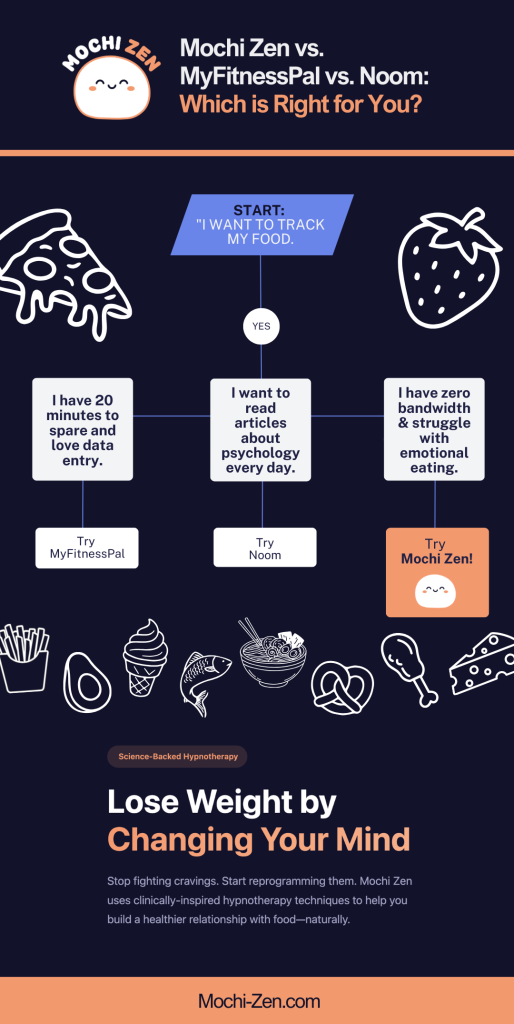
The short answer: choose MyFitnessPal if you love meticulous data entry, Noom if you want daily lessons, and Mochi Zen if you want to end emotional eating and the all-or-nothing cycle at the subconscious level. Choosing a weight loss app usually feels like choosing between a Calculator (MyFitnessPal) or a Textbook (Noom). But for most of us, the problem isn’t that we can’t do math or that we don’t know that vegetables are healthy.
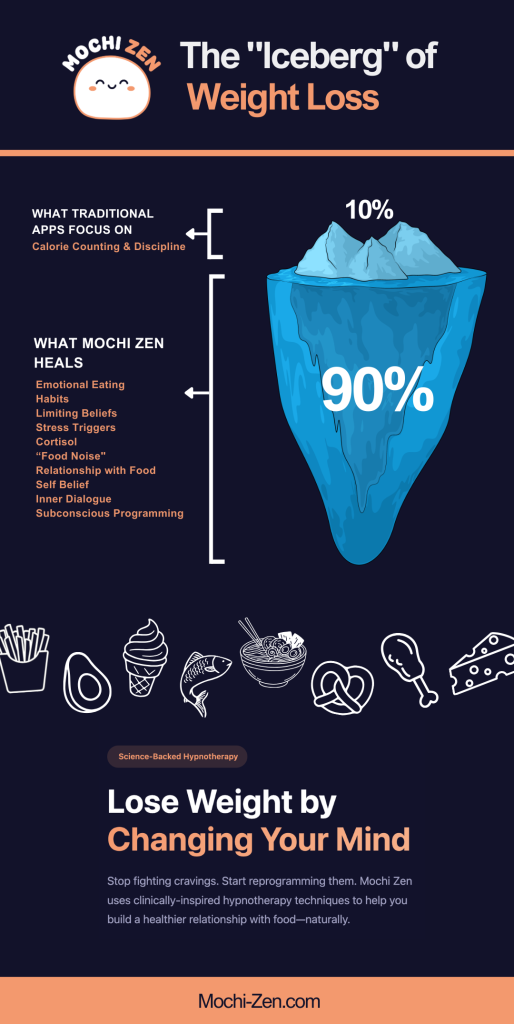
The problem is the internal war: the “food noise,” the stress-eating, and the “all-or-nothing” cycle.
At Mochi Zen, we believe you shouldn’t have to choose between science and soul. Here is how we compare to the industry giants.
Mochi Zen was created by Paola Mendez, a certified RTT (Rapid Transformational Therapy) hypnotherapist trained by Marisa Peer.
The Quick Comparison
| Feature | MyFitnessPal | Noom | Mochi Zen |
|---|---|---|---|
| Primary Method | Manual Calorie Counting | Psychology-lite Articles | Photo or Typed Logging + Hypnosis |
| Tracking Time | 15–20 mins / day | 10–15 mins / day | < 2 mins / day |
| Mental Focus | Discipline & Limits | Education & Quizzes | Healing & Rewiring |
| Anti-Shame Tech | No (Red bars for “over”) | Moderate | Yes (Neutral Macros Data) |
| Subconscious Work | None | None | Subconscious Reprogramming Audio |
Deep Dive: Mochi Zen vs. MyFitnessPal
The “Manual Entry” Burnout
MyFitnessPal is a powerhouse of data, but it requires a level of data entry that feels like a part-time job. For the high-performer with zero bandwidth, manual entry is the first thing to break when stress hits.
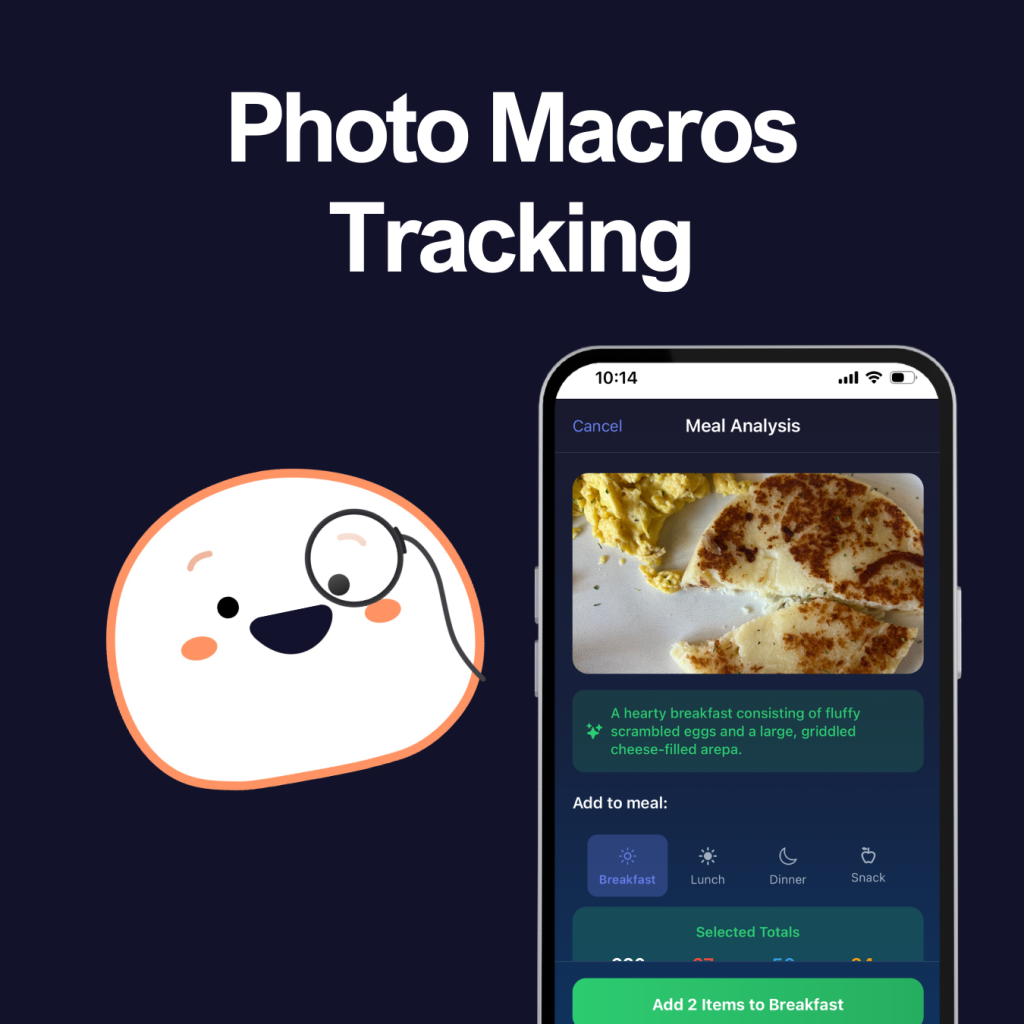
The Mochi Zen Difference: We replaced the database search with a 5-second Easy Photo Meal Scan. Snap a photo or type what you ate in a plain sentence, and Mochi Zen identifies the macros. We move you from “Confession” to “Observation.” No database digging, no friction, just data.
Deep Dive: Mochi Zen vs. Noom
Knowledge vs. Rewiring
Noom did a great job introducing the “psychology” of eating through daily articles and quizzes. However, knowing why you eat emotionally doesn’t always stop you from doing it. Knowledge stays in the conscious mind, while cravings live in the subconscious.
The Mochi Zen Difference: Instead of reading about psychology, you experience it. As a Rapid Transformational Hypnotherapist, I built Mochi Zen to use Alpha-state audio sessions that bypass the “critical factor” of your mind. We don’t just teach you about your habits; we help you rewire them while you breathe.
The evidence backs this approach: in a landmark meta-analysis, people who added hypnosis to their weight-loss treatment lost roughly twice as much weight as those using diet-and-behavior methods alone, and maintained the loss at two-year follow-up.
Why Mochi Zen is the “Third Way”
Mochi Zen was built specifically for the Cycle Breaker: the person who has “done it all” and is tired of starting over on Monday.
1. The “Anti-Shame” Guardrails
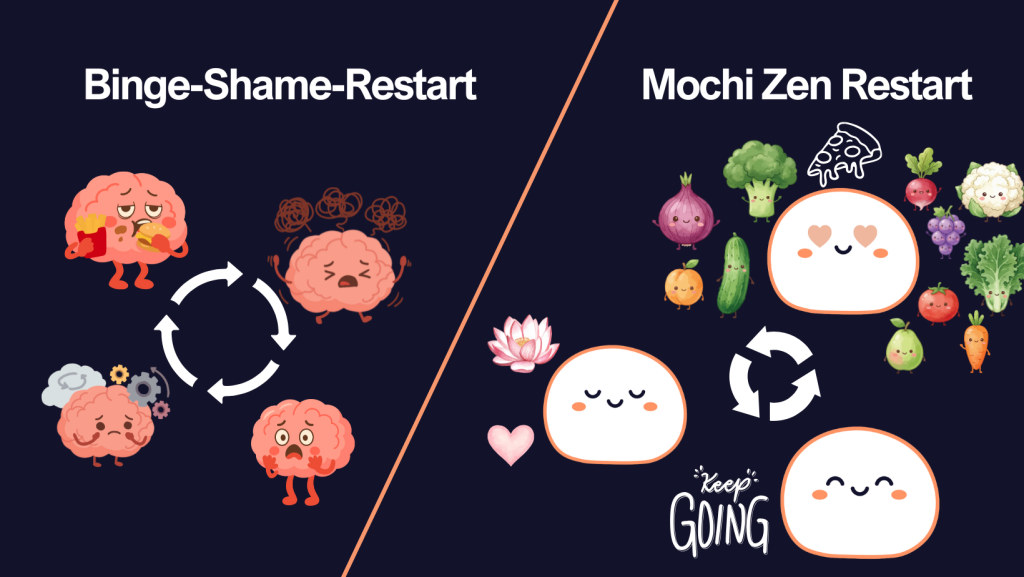
Traditional apps use red colors and “failed” alerts when you exceed a goal. This triggers a shame response that leads to a binge. Mochi Zen uses a “Zen” interface and a supportive mascot to keep data neutral.
2. Protecting Your Bandwidth
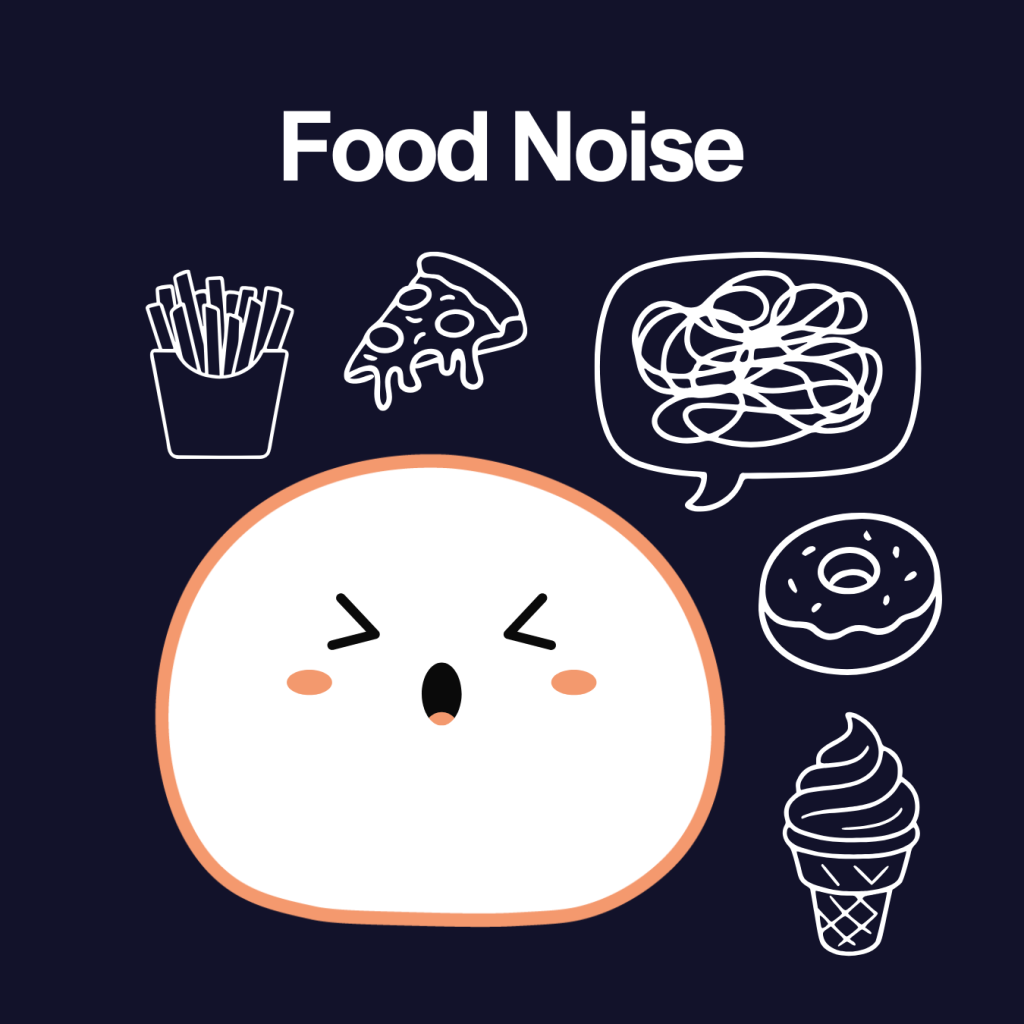
We recognize that decision fatigue is the #1 killer of diets. By simplifying the macros tracking (Photo Meal-Scanning) and calming the nervous system (Hypnosis), we preserve your mental energy for your career and family.

3. Permanent Change through Subconscious Reprogramming
Our audio tracks are based on the same techniques used in Pao Hypnosis. We address the root cause: the limiting beliefs and childhood programming that make you use food as a shield or a reward.
Which one should you choose?
- Choose MyFitnessPal if: You are a bodybuilder or athlete who loves meticulous data entry and has high willpower.
- Choose Noom if: You enjoy a classroom-style learning environment and want to read daily lessons about nutrition.
- Choose Mochi Zen if: You are a busy professional or a “Cycle Breaker” who wants to end emotional eating, simplify tracking to 5 seconds, and finally heal your relationship with food for good.
Want to go deeper on either side of the comparison? Read Mochi Zen vs. MyFitnessPal: Why Your Diet App Feels Like a Second Job and How to Stop Emotional Eating: The Mochi Zen Guide.
The Iceberg of Weight Loss Comparing Mochi Zen with Other Weight Loss Apps
Frequently Asked Questions
Which is better, Mochi Zen or MyFitnessPal?
It depends on what breaks your diets. MyFitnessPal suits athletes who enjoy meticulous manual calorie entry and have high willpower. Mochi Zen is better if manual logging burns you out or stress-eating derails you: it replaces database searches with a 5-second photo meal scan and adds hypnotherapy for the subconscious patterns.
Which is better, Mochi Zen or Noom?
Noom teaches the psychology of eating through daily articles and quizzes, which suits people who enjoy classroom-style learning. Mochi Zen goes further: instead of reading about your habits, its Alpha-state hypnotherapy audio sessions help rewire them at the subconscious level, where cravings actually live. Knowledge alone rarely stops emotional eating.
What makes Mochi Zen different from traditional diet apps?
Mochi Zen combines 5-second photo macros tracking with subconscious reprogramming audio, a combination no traditional tracker offers. It also uses anti-shame design: neutral macros data and a supportive interface instead of red bars and failure alerts, which helps break the shame-binge cycle that traditional apps can trigger.
How long does meal tracking take in Mochi Zen?
Under two minutes a day. You snap a photo of your meal (macros in about five seconds) or type what you ate in a plain sentence, and Mochi Zen identifies the foods and macros. Compare that with roughly 15 to 20 minutes a day of manual database entry in MyFitnessPal, or 10 to 15 minutes of lessons and logging in Noom.
Does hypnotherapy actually work for weight loss?
Yes, the evidence is strong. In a landmark meta-analysis, people who added hypnosis to their weight-loss treatment lost roughly twice as much weight as those using diet-and-behavior methods alone, and maintained the loss at two-year follow-up. Hypnotherapy works on the subconscious patterns that willpower alone cannot reach.
Who should choose Mochi Zen?
Mochi Zen was built for the Cycle Breaker: the busy professional who has tried every diet and is tired of starting over on Monday. If you want to end emotional eating, simplify tracking to a 5-second photo, and heal your relationship with food for good, Mochi Zen is the fit.
Disclaimer: This post is for informational purposes only and is not a substitute for professional medical or mental health care. Results vary. If emotional eating or weight concerns are severe or persistent, please consult a qualified healthcare provider.