
You can’t stop binging at night because the binge is a symptom of daytime restriction, depleted willpower, and a subconscious program that links food with comfort, not a lack of discipline. Lasting change comes from eating enough during the day and rewiring that pattern at the subconscious level.
Table of Contents
- Sound Familiar?
- Why Nighttime Binging Is So Common
- The Real Reason You Binge at Night
- What Nighttime Binging Is Actually Telling You
- Why Common Fixes Don’t Work
- How to Stop Binging at Night for Good
- When to Seek Professional Support
- Frequently Asked Questions
Sound Familiar?
You had a good day. You ate well, maybe even perfectly. You felt in control, maybe even proud of yourself. Then evening arrived.
Somewhere between dinner and bedtime, something shifted. You found yourself in the kitchen, opening the fridge, eating things you swore you wouldn’t touch, and not even fully understanding why. By the time you stopped, the guilt had already set in. You promised yourself tomorrow would be different.
It wasn’t.
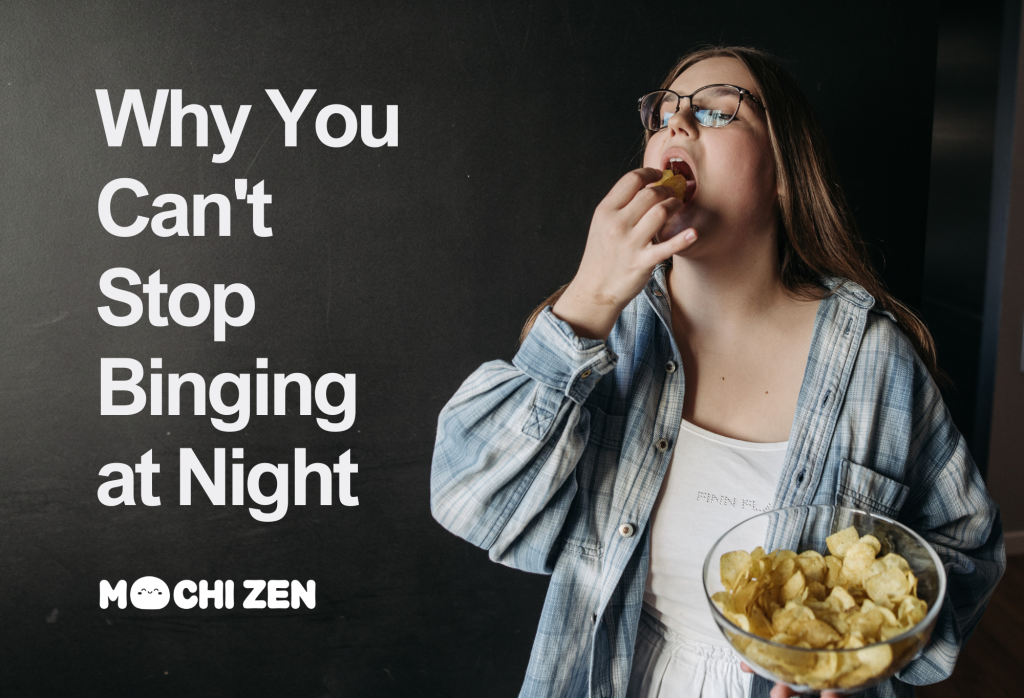
If this is your pattern, you’re not alone, and more importantly, you’re not broken. Nighttime binging is one of the most common struggles among women who have tried every diet and can’t understand why their evenings keep unraveling. The reason it keeps happening has nothing to do with willpower, and everything to do with what’s driving the behavior beneath the surface.
This guide was written by Paola Mendez, a certified RTT (Rapid Transformational Therapy) hypnotherapist trained by Marisa Peer and the founder of Mochi Zen.
Already know the willpower approach isn’t working?
Try Mochi Zen Free for 7 Days →
RTT-based hypnotherapy audio sessions (designed to be listened to at night) combined with AI nutrition tracking. Fix the root cause while you wind down.
Why Nighttime Binging Is So Common
Nighttime isn’t just when binging happens to occur; there are specific biological and psychological reasons why evening is the most vulnerable time of day for emotional eating.
Willpower runs out
Willpower is a finite resource that depletes throughout the day. Psychologists call this decision fatigue: the more choices and demands your brain processes during the day, the less capacity it has for self-regulation by evening. By the time 9pm rolls around, the mental guard you’ve been keeping up all day has nothing left. The subconscious takes over, and the subconscious goes straight for comfort.
Daytime restriction catches up with you
If you’ve been restricting during the day (skipping meals, cutting carbs, eating “clean”), your body and brain are running a deficit by nightfall. Physically, hunger hormones are elevated. Psychologically, the sense of deprivation has been building all day. The night binge isn’t a failure of discipline. It’s a predictable biological response to restriction.
Evening is emotionally unstructured time
During the day, work, responsibilities, and social demands keep you occupied and distracted. Evening removes that structure. Stress, loneliness, boredom, and difficult feelings that were pushed aside all day suddenly have nowhere to go. Food becomes the fastest available relief.
The subconscious runs its programs in the quiet
When the conscious mind is tired and distracted, the subconscious runs more freely. If your subconscious has learned that food equals comfort, reward, or relief from stress, that program activates most strongly when you’re depleted, alone, and quiet. Nighttime is peak subconscious territory.
The Real Reason You Binge at Night
Here’s the thing most nutrition advice won’t tell you: the binge itself isn’t the problem. It’s a symptom.
Nighttime binging is almost always the endpoint of a chain that started much earlier in the day, or much earlier in your life. That chain might look like:
- A stressful day that left you depleted and overwhelmed
- A pattern of daytime restriction that has your body running on empty
- A long-established subconscious belief that evening is your time, and food is your reward
- Unresolved emotional tension (anxiety, loneliness, boredom) that found its only available outlet
None of these are solved by eating less, going to bed earlier, or locking the kitchen. They’re solved by addressing the underlying belief and emotional pattern, which is exactly what most conventional approaches never touch.
Related: How to Get Over Binge Eating: Why Willpower Isn’t the Problem
What Nighttime Binging Is Actually Telling You
Nighttime binging isn’t random. It’s communication: your nervous system signaling an unmet need. Learning to read that signal instead of fighting it is one of the most important shifts in breaking the cycle.
Ask yourself: what is the binge actually giving you?
- Relief from stress? Your body is telling you it’s carrying too much tension with nowhere to put it.
- A sense of reward? You’ve been denying yourself all day, and at night you reclaim something that feels like yours.
- Comfort from loneliness? Food is providing connection and warmth that isn’t coming from elsewhere.
- A way to numb out? Difficult thoughts or feelings are being suppressed by the act of eating.
None of these needs are wrong. They’re completely human. The problem isn’t the need; it’s that food has become the primary way of meeting it. And until a new, healthier response is wired in at the subconscious level, food will keep winning.
What if you could meet those needs without food?
See How Mochi Zen’s RTT Sessions Work: Try Free →
Why Common Fixes Don’t Work
“Just don’t keep junk food in the house”
This reduces friction but doesn’t address the drive. People who binge at night will eat whatever is available: crackers, peanut butter, cereal, bread. The food isn’t the problem. The urge is the problem.
“Eat more during the day so you’re not hungry at night”
This can help with physical hunger, but most nighttime binging isn’t physical hunger. It’s emotional. More food during the day doesn’t resolve the stress, loneliness, or depletion that shows up after dark.
“Create a bedtime routine”
Helpful, but only if the routine actually addresses the emotional state driving the binge. A bath and a herbal tea won’t quiet a subconscious program that’s been running for years.
“Track everything and stay accountable”
Tracking can create awareness, but it often adds pressure. For someone already in a guilt-shame-restriction cycle, more tracking can intensify the all-or-nothing thinking that makes binges worse. Accountability without addressing the root cause is like measuring the hole in the boat without fixing it.
How to Stop Binging at Night for Good
Sustainable change requires working on both the emotional root cause and the practical day-to-day habits. Here’s what that looks like:
Step 1: Stop restricting during the day
This is the most counterintuitive step, but it’s essential. Daytime restriction is one of the biggest drivers of nighttime binging. Eating enough during the day, including satisfying foods, removes the physical and psychological deprivation that fuels the evening spiral. You can’t out-restrict a binge. Stop trying.
Step 2: Name what you’re actually feeling before you reach for food
When the urge to eat at night arises, pause for thirty seconds and name the emotion underneath it. I’m stressed. I’m bored. I feel lonely. I’m overwhelmed. You don’t have to fix the feeling; just name it. This single habit begins to interrupt the automatic pattern and creates a small but powerful gap between the trigger and the response.
Step 3: Rewire the nighttime pattern with RTT hypnotherapy
This is where lasting change actually happens. Rapid Transformational Therapy (RTT), developed by Marisa Peer, uses hypnotherapy to access and update the subconscious beliefs that have been driving the nighttime eating. RTT audio sessions are ideal for evening use: you listen in a relaxed state as you wind down, and the sessions do the work of rewiring the patterns that willpower never could.
Research supports this approach. Kirsch (1996), publishing in the Journal of Consulting and Clinical Psychology, found that patients using hypnotherapy lost more than twice the weight of a control group, with results maintained at a two-year follow-up. (Source: PubMed)
Step 4: Replace the ritual, not just the food
Your brain has associated nighttime with a ritual: the act of going to the kitchen, choosing something, eating it. The ritual itself provides comfort, not just the food. Building a new nighttime ritual that meets the same emotional need (a walk, a journal, a RTT audio session, a warm drink) gives the brain a new pathway to run. Over time, the new ritual becomes the default.
Step 5: Track your food from a place of curiosity, not punishment
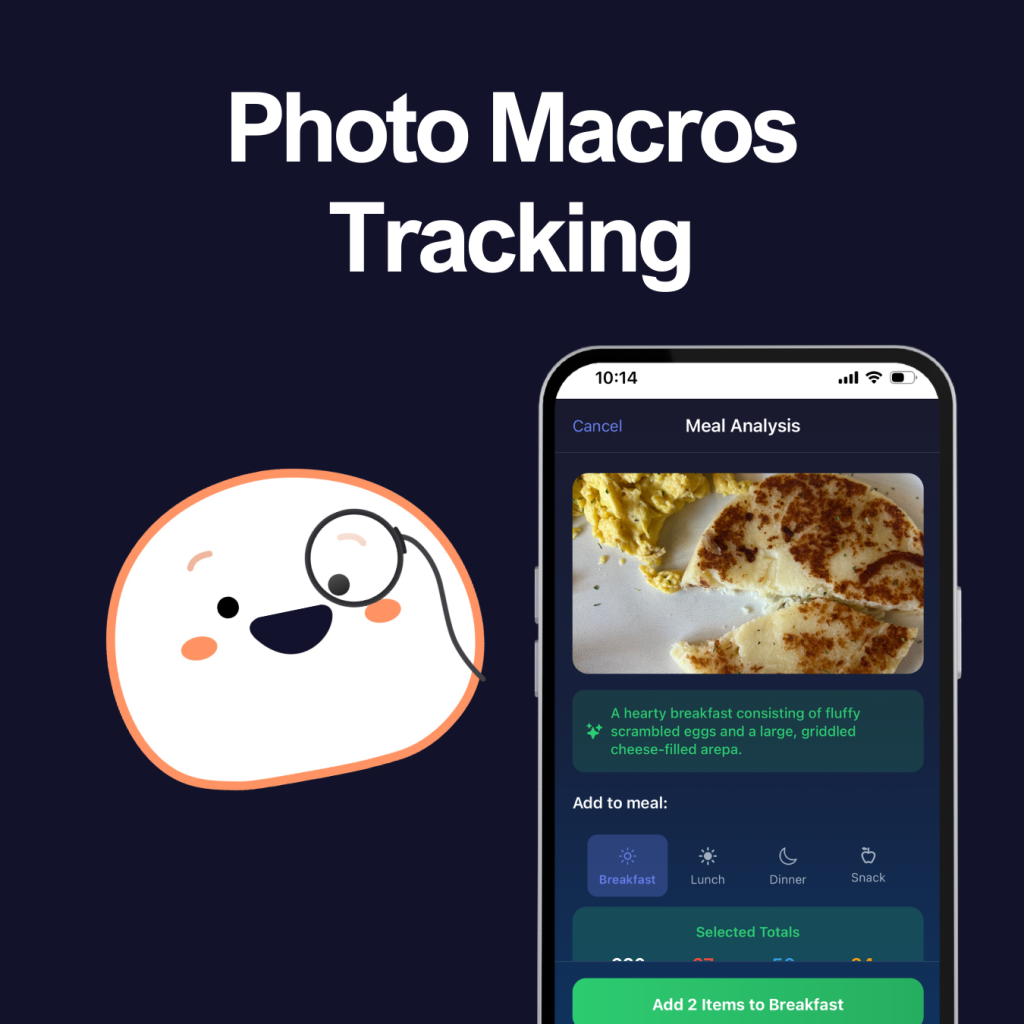
Once the emotional charge around nighttime eating begins to ease, food awareness becomes a genuinely useful tool rather than a source of guilt. Logging what you eat (including the evenings) gives you data to understand your patterns without judgment. This is the role nutrition tracking plays in Mochi Zen: paired with RTT sessions, not instead of them.
Related: How to Stop Overeating for Good: The Root Cause No One Talks About
When to Seek Professional Support
If nighttime binging is happening most nights, is causing significant physical or emotional distress, or feels completely beyond your control, please reach out to a licensed therapist or eating disorder specialist. App-based support is a powerful complement, but professional care is irreplaceable when the pattern is severe.
Paola Mendez also offers private one-on-one RTT sessions through Pao Hypnosis for women who want deeper, personalized work alongside or instead of an app.
Frequently Asked Questions
Why do I binge eat at night but not during the day?
Nighttime is when willpower is most depleted, daytime restriction has fully caught up, and emotional stress has nowhere left to go. The subconscious also runs more freely when the conscious mind is tired, and if your subconscious has learned that food equals comfort or reward, it will run that program most strongly at night.
Is it normal to binge eat at night?
It’s extremely common. Many women who appear to eat well during the day struggle significantly with nighttime eating. It doesn’t mean something is wrong with you; it means a pattern has been established that needs to be addressed at the root, not suppressed with more willpower.
Can not eating enough during the day cause nighttime binging?
Yes, daytime restriction is one of the most reliable drivers of nighttime binging. When you under-eat or restrict during the day, your body and brain are running a physical and psychological deficit by evening. The nighttime binge is often your body’s way of correcting that imbalance. Eating sufficiently during the day is one of the most important steps in breaking the cycle.
Is night eating a disorder?
Night Eating Syndrome (NES) is a recognized clinical condition characterized by consuming a significant portion of daily calories after dinner, often paired with morning appetite loss and distress. It’s different from occasional nighttime snacking or emotional eating, though there is overlap. If you suspect NES, speaking with a healthcare provider is the right step.
How do I stop craving food at night?
The most effective long-term approach is to address what the craving is actually for (whether that’s stress relief, comfort, reward, or numbing) and rewire the subconscious pattern that connects food to that need. RTT hypnotherapy is particularly effective for this. Practical steps include eating enough during the day, naming emotions before reaching for food, and building a new nighttime ritual that meets the same emotional need.
Does hypnotherapy work for nighttime binging?
Yes, and it’s particularly well-suited to it. RTT hypnotherapy sessions are ideally used in the evening in a relaxed state, which makes them a natural fit for replacing the nighttime binging ritual. The sessions work at the subconscious level to update the beliefs and associations driving the behavior. Many people notice a meaningful shift in their nighttime cravings after consistent use.
Why do I eat when I’m stressed at night?
Stress elevates cortisol, which directly increases appetite and cravings for high-sugar, high-fat foods. Evening is when the accumulated stress of the day is most present, and food provides rapid (if temporary) cortisol relief. This is a physiological response, not a personal failing. Addressing the stress itself, and building new stress-relief pathways, is what breaks the nighttime eating habit for good.
About the Author
Paola Mendez is a certified hypnotherapist and Rapid Transformational Therapy (RTT) practitioner, trained in the methodology developed by Marisa Peer. She is the founder of Mochi Zen (a weight loss app combining RTT-based hypnotherapy with AI-powered nutrition tracking) and Pao Hypnosis, her private practice. She specializes in helping women break free from nighttime binging, emotional eating, and the exhausting cycles that no diet has been able to fix.
Done Waking Up With Food Guilt?
Mochi Zen’s RTT-based audio sessions are designed to be used at night, rewiring the patterns that drive nighttime binging while you wind down. Paired with AI nutrition tracking so you can see the whole picture.
Health Disclaimer: The content in this article is for informational purposes only and is not a substitute for professional medical or psychological advice, diagnosis, or treatment. RTT-based hypnotherapy is a complementary approach and should not replace care from a qualified healthcare provider. If you are experiencing symptoms of an eating disorder or Night Eating Syndrome, please consult a licensed professional.