At a Glance: The Bandwidth Problem
Weight loss isn’t a lack of discipline; it’s a bandwidth problem. Scientific research into Decision Fatigue shows that every choice you make during the day erodes your self-control by evening. Mochi Zen solves this by removing the “Cognitive Load” of manual calorie counting. By combining 5-second easy photo meal-scanning with mindfulness audio, we protect your mental energy, allowing you to maintain nutritional consistency without sacrificing your professional performance.
Mochi Zen was created by Paola Mendez, a certified RTT (Rapid Transformational Therapy) hypnotherapist trained by Marisa Peer.
The Science of the “Evening Slide”
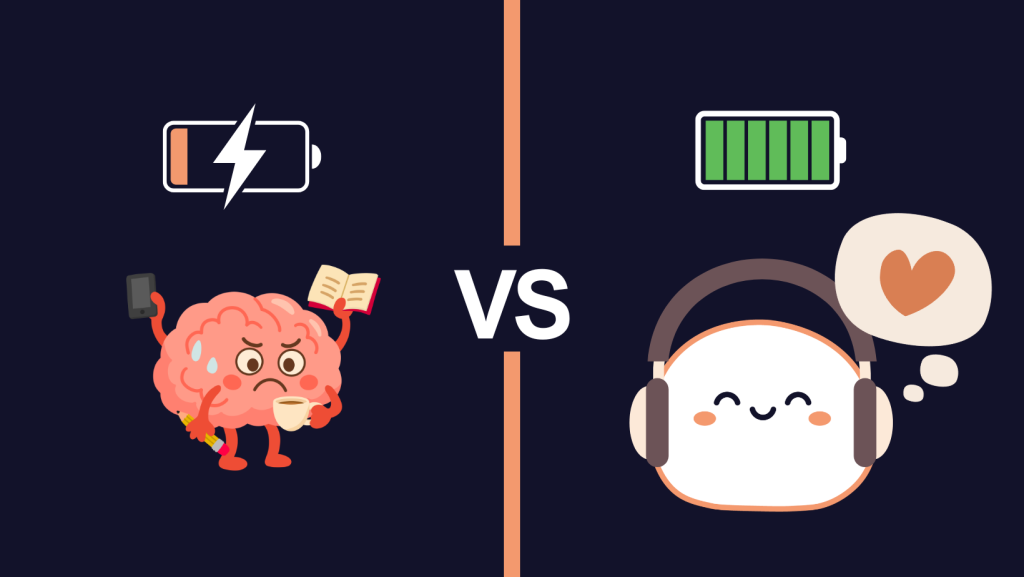
Have you ever noticed that your “healthiest” choices happen at 8 AM, but your “worst” happen after 6 PM? This isn’t a coincidence. It’s biology.
The prefrontal cortex, the part of your brain responsible for executive function and self-control, has a limited capacity. A famous study on judicial rulings found that judges were significantly more likely to grant parole in the morning than at the end of a long day (Danziger et al., 2011). If professional judges can’t maintain perfect logic under fatigue, why do we expect ourselves to perfectly calculate calories after a 10-hour workday?
How Traditional Tracking Exhausts You
Manual logging is a high-friction task. Searching, weighing, and measuring food requires dozens of small decisions. When you add this “Cognitive Load” to a high-stress career, your “mental RAM” runs out. This is why you delete your tracking app the moment life gets busy.
Mochi Zen: Frictionless Tech for Busy Minds
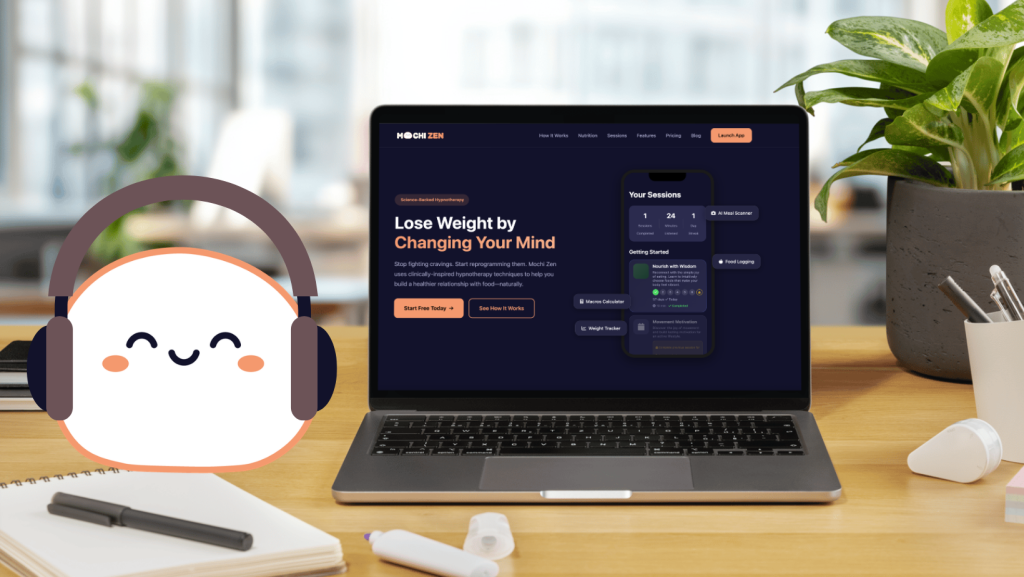
Mochi Zen was designed to be the “Easy Button” for your health:
- Easy Photo Scanner: Reduces the time it takes to log a meal from 5 minutes to 5 seconds.
- Neutral Feedback: No “red alerts” that trigger shame and further drain your mental resources.
- Performance Resets: 10-minute hypnotherapy sessions that lower cortisol and “recharge” your executive function mid-day.
Protect Your Performance
You shouldn’t have to choose between your career and your health. By automating the how (Macros Tracking) and healing the why (Hypnosis), Mochi Zen allows you to stay in your “High-Performance Zone” without the burnout. The hypnosis side isn’t a gimmick, either: in a landmark meta-analysis, participants who added hypnotherapy to their weight-loss treatment lost roughly twice the weight of diet-only groups and maintained it at a two-year follow-up (Kirsch, 1996).
Related reading: Why You Can’t Stop Binging at Night and How to Stop Emotional Eating: The Mochi Zen Guide.
Frequently Asked Questions (FAQ)
What exactly is decision fatigue in the context of dieting?
Decision fatigue is the decline in the quality of decisions made by an individual after a long session of decision-making. In dieting, this means that after a day of making work and life choices, your “willpower battery” is depleted, making it significantly harder to resist high-calorie convenience foods in the evening.
How does Mochi Zen reduce my cognitive load?
Traditional tracking requires you to identify ingredients, estimate weights, and search databases; this involves dozens of micro-decisions. Whether you take a photo scan in 5 seconds or just type a quick sentence about what you ate, Mochi Zen handles the data entry, portions, and macros for you, preserving your mental energy for more important tasks.
Can a 10-minute hypnosis session really stop a 6 PM binge?
Yes. Our “Performance Reset” sessions are designed to shift your brain from a high-stress “Beta” state to a relaxed “Alpha” state. This lowers cortisol (the stress hormone linked to cravings) and re-engages the prefrontal cortex, giving you back your power to choose.
Is Mochi Zen only for “high-performers”?
While we focus on professionals, “high performance” applies to anyone managing a high-stress load, be it a CEO, a parent, or a student. If you feel mentally drained by the end of the day, Mochi Zen is built for you.
Why do I binge in the evening but eat well all morning?
Your prefrontal cortex (the brain region responsible for self-control) has limited capacity that erodes with every decision you make during the day. By evening, after hours of work and life choices, that capacity is depleted, so your brain defaults to impulsive, high-dopamine rewards like sugar and processed fats.
How is Mochi Zen different from traditional calorie counting apps?
Traditional apps demand dozens of micro-decisions per meal (searching, weighing, measuring), which adds cognitive load to an already drained mind. Mochi Zen logs a meal from a photo in about five seconds or from a plain sentence you type, gives neutral feedback instead of shame-triggering red alerts, and adds 10-minute hypnotherapy resets that recharge executive function.
The Neuroscientist’s Perspective: On Decision Fatigue
“Decision fatigue isn’t just a lack of willpower; it’s a measurable decline in executive function. When the prefrontal cortex is exhausted by a day of professional choices, the brain naturally defaults to impulsive, high-dopamine rewards, usually in the form of sugar and processed fats. By automating the data entry of nutrition, Mochi Zen preserves that vital ‘mental bandwidth,’ allowing the user to maintain consistency without the mental tax.”
Disclaimer: This post is for informational purposes only and is not a substitute for professional medical or mental health care. Results vary. If evening binge eating or stress-related overeating is severe or persistent, please consult a qualified healthcare provider.